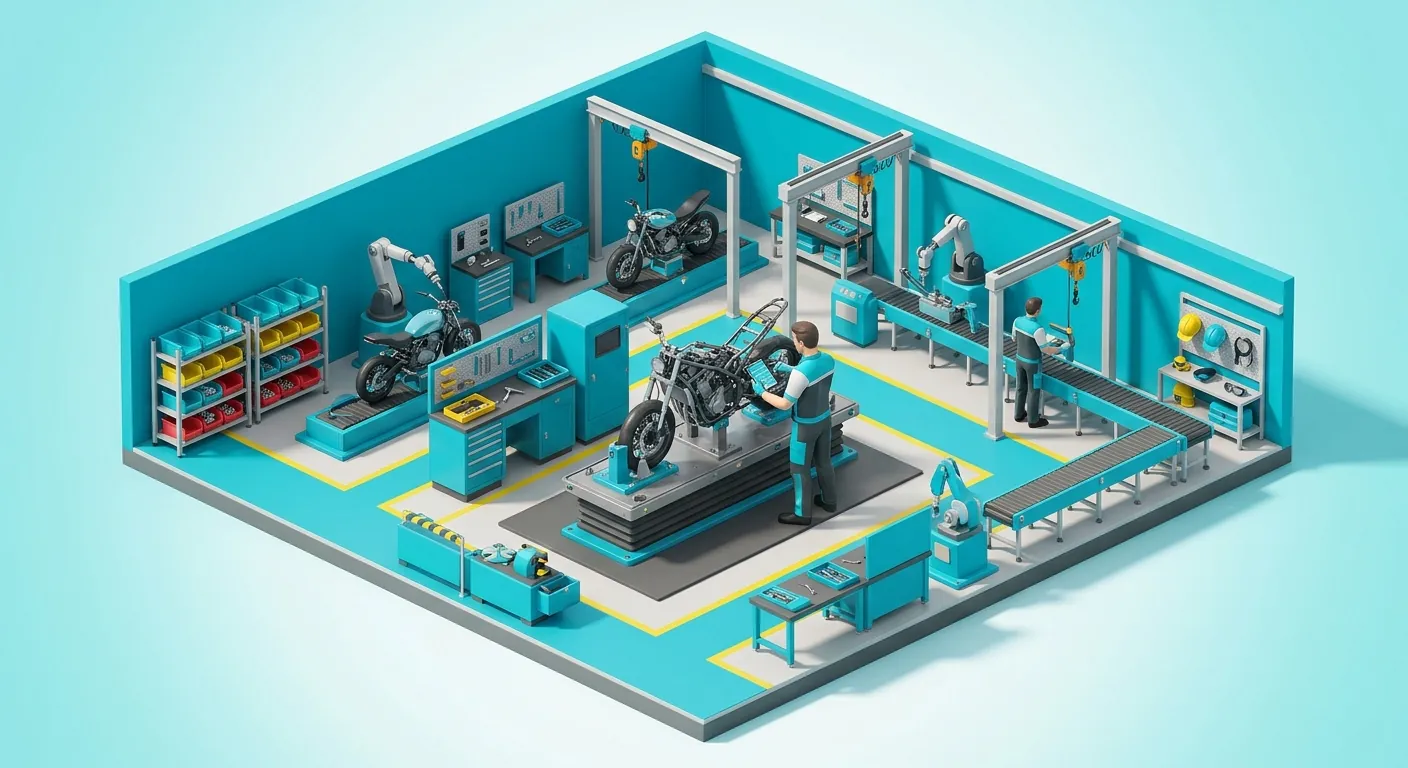
- Motorcycle plant in Manaus combining production and Suframa brings together engineering, importing, and industrialization in a single operation, without having to deal with multiple separate agencies and companies.
- Over 20 years of hands-on experience with the PPB approved by SUFRAMA and exemption from keeping an active Radar registration with the Federal Revenue Service.
- Bringing production and regulation together in the same territory cuts steps that, under another model, would depend on separate suppliers and customs brokers.
Motorcycle plant in Manaus combining production and Suframa is the answer for brands that want to assemble motorcycles in Brazil without negotiating separately with a factory, a customs broker, and different regulatory agencies.
This article shows how many steps this model eliminates in practice, from importing inputs to shipping the finished product.
Understanding this integration helps you decide with more confidence before taking on an industrialization project in the Manaus Free Trade Zone.
Topics We Cover:
Motorcycle plant in Manaus combining production and Suframa: The problem this model solves
Assembling motorcycles in Brazil usually means negotiating with a factory in one state, a customs broker at another port, and a regulatory agency that handles each tax step in isolation. Each party follows its own timeline and its own approval logic. The result is a fragmented schedule that depends on alignment between parties who don’t share the same process.
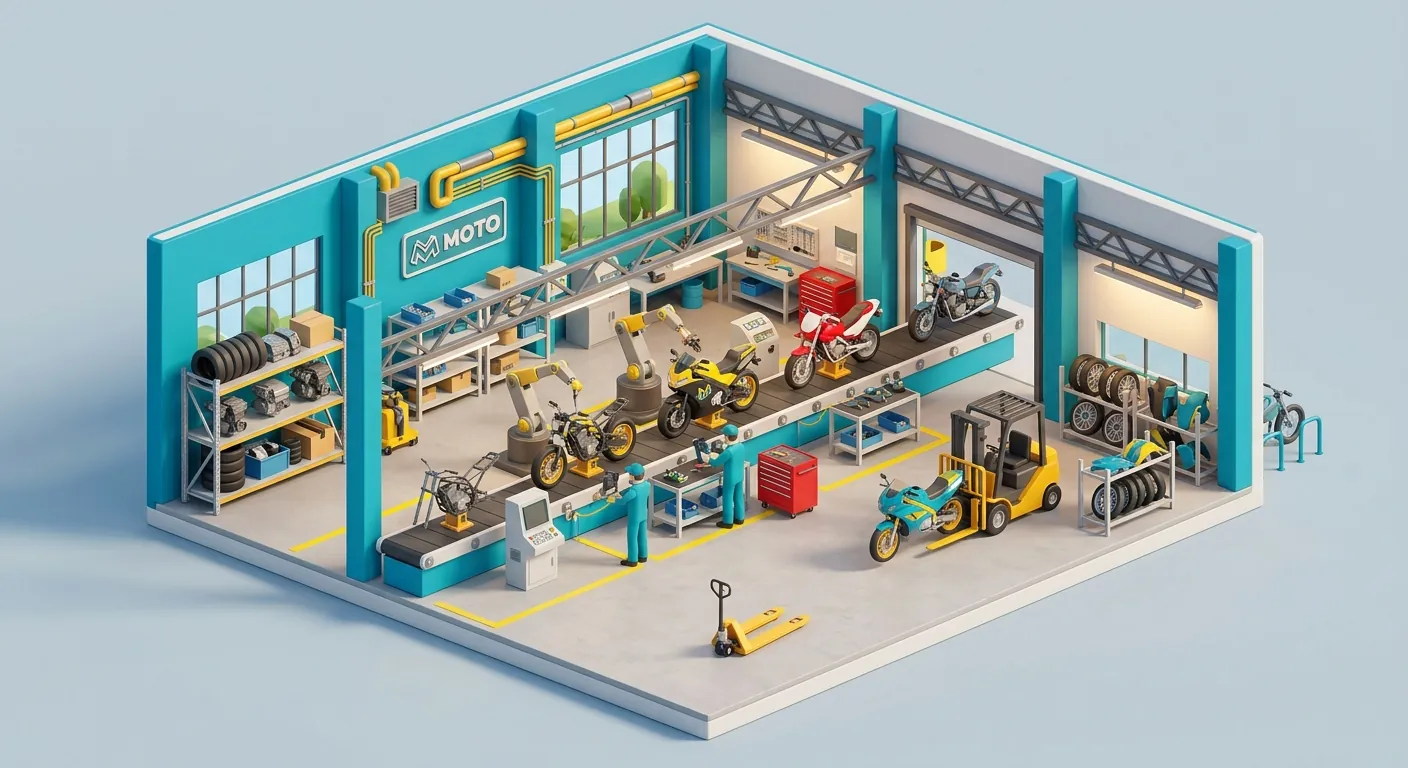
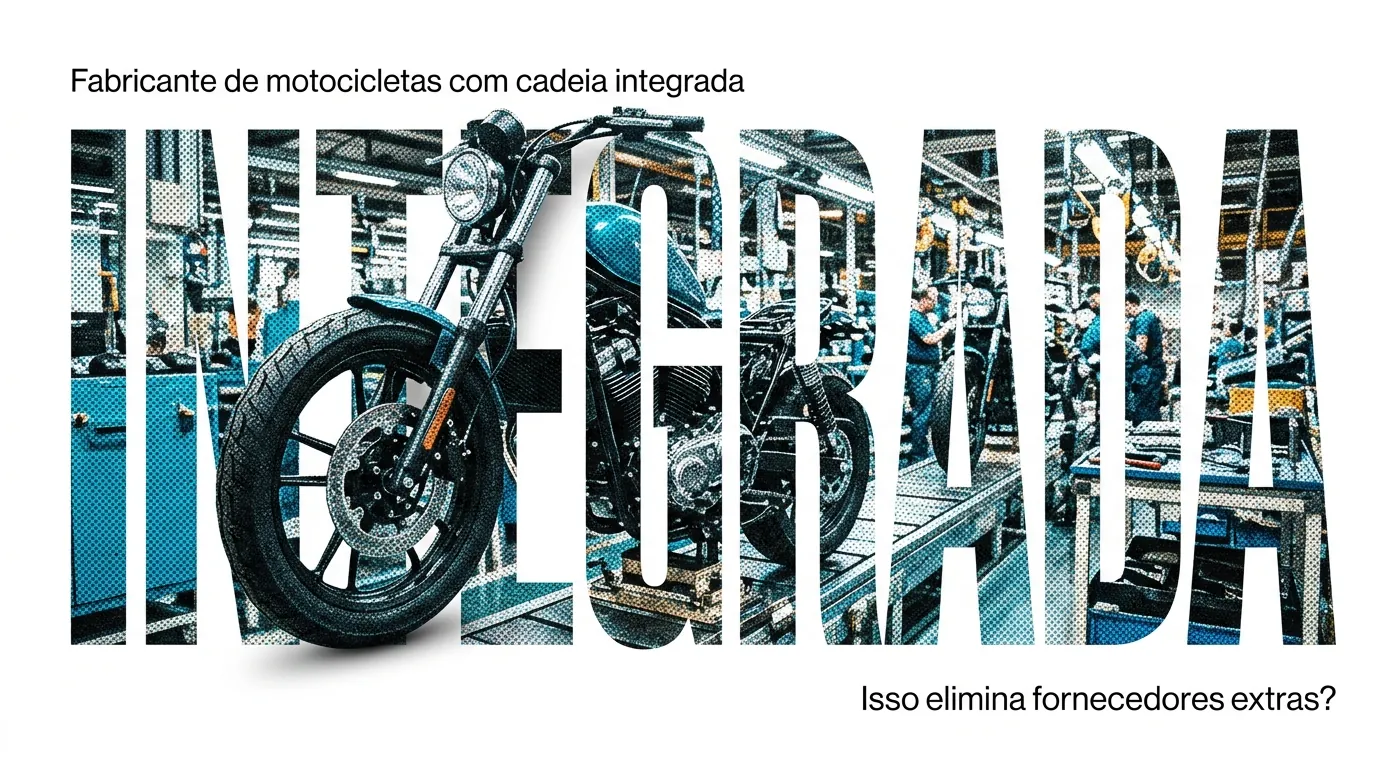
The motorcycle plant in Manaus combining production and Suframa solves this fragmentation by placing industrialization inside the same territory regulated by the agency that approves the PPB. The operation, the importing of inputs, and tax compliance all happen under the same structure. This eliminates the need for three separate points of contact for each step.
Engineering, purchasing, and customs clearance decisions are now made within a single chain of responsibility. When an input’s specification changes, the response doesn’t depend on aligning three different companies. This is the central trait of a motorcycle plant in Manaus combining production and Suframa: traceability concentrated in one place.
This is the key point that sets the motorcycle plant in Manaus combining production and Suframa apart from a traditional outsourcing model: regulatory approval stops being an external step and becomes part of the same production flow. The PPB approved by SUFRAMA covers the tax classification. Industrialization under its own name removes the need to keep an active Radar registration with the Federal Revenue Service.
A motorcycle plant in Manaus combining production and Suframa with territorial integration is what makes it possible to cut steps without giving up traceability. The Manaus Free Trade Zone provides the tax structure; the plant provides the production structure. Together, they form the arrangement that the rest of this content explains in detail.
How does the OEM/CKD assembly model work in the Manaus Free Trade Zone?
CKD and OEM are the two most common models for contract motorcycle assembly in Brazil. In CKD, components arrive disassembled and are assembled in the Manaus Free Trade Zone, following the product’s manufacturing process. In OEM, the brand defines the specification and the industrial partner produces it under the client’s own identity.
The difference between the two models lies in the origin of the product’s engineering, not the factory’s location. Both models take place within the same SUFRAMA-regulated territory, which means the tax classification is the same for both structures. What changes is how much the brand participates in defining the product.
This detail matters because many brands associate CKD only with electronics or less complex products. In practice, the Manaus Free Trade Zone also covers electric vehicles, combustion motorcycles, electromechanical toys, and sporting goods, within the NCMs classified under SUFRAMA’s PPBs.
Understanding this difference helps decide which model best fits the brand’s current stage. A brand that already has a defined product tends to choose CKD. A brand still adapting its product to the Brazilian market tends to benefit more from the OEM model.
In both cases, the process follows the same logic: engineering, importing inputs on behalf of the industrial partner, and industrialization within the Manaus Industrial Hub. SUFRAMA’s regulation doesn’t distinguish between the two models for PPB purposes; the difference only appears in who’s responsible for the product’s design.
Which steps does the motorcycle plant in Manaus combining production and Suframa eliminate in practice?
The most direct answer is that the motorcycle plant in Manaus combining production and Suframa eliminates the need to coordinate a customs broker, an outsourced factory, and a tax agency separately for each batch. Below are the steps that no longer exist as isolated points of contact.
- Separate negotiation with a customs broker outside the manufacturing operation.
- Alignment between the factory and a representation office for PPB classification.
- Opening and maintaining a company’s own Radar registration with the Federal Revenue Service to import inputs.
- Isolated tax validation for each NCM before releasing industrialization.
- Intermediation between the input supplier and the assembly plant in different territories.
Each item on this list represents a point of contact that, on its own, requires its own negotiation and timeline. A motorcycle plant in Manaus combining production and Suframa concentrates this responsibility into a single flow, within the same SUFRAMA-regulated territory.
That’s why brands evaluating industrializing in Brazil ask, early on, how a motorcycle plant in Manaus combining production and Suframa works. The answer lies less in geography and more in how the regulatory process is absorbed by the manufacturing operation.
In practice, the lead time of a motorcycle plant in Manaus combining production and Suframa depends more on matching the manufacturing process to the PPB than on logistics between companies. When purchasing, importing, and production answer to the same coordination, the schedule doesn’t depend on external alignments.
This format also simplifies auditing the process of a motorcycle plant in Manaus combining production and Suframa. Since engineering, importing, and industrialization sit under the same arrangement, traceability is more straightforward to verify than in a chain with multiple external suppliers.
Common myths about SUFRAMA in motorcycle production
Before taking on an operation in the Manaus Free Trade Zone, brands commonly carry misconceptions about what SUFRAMA covers and requires. Some of these myths delay decisions that could be made with more confidence. Here are the most common ones.
- Myth: the Manaus Free Trade Zone’s tax benefit only applies to electronics. Reality: SUFRAMA also classifies electric vehicles, combustion motorcycles, electromechanical toys, and sporting goods, under NCMs 8711, 9503, and 9506.
- Myth: you need to keep an active Radar registration with the Federal Revenue Service to import inputs. Reality: when the import happens on behalf of the industrial partner, characterizing industrialization, the client doesn’t need to keep its own Radar registration.
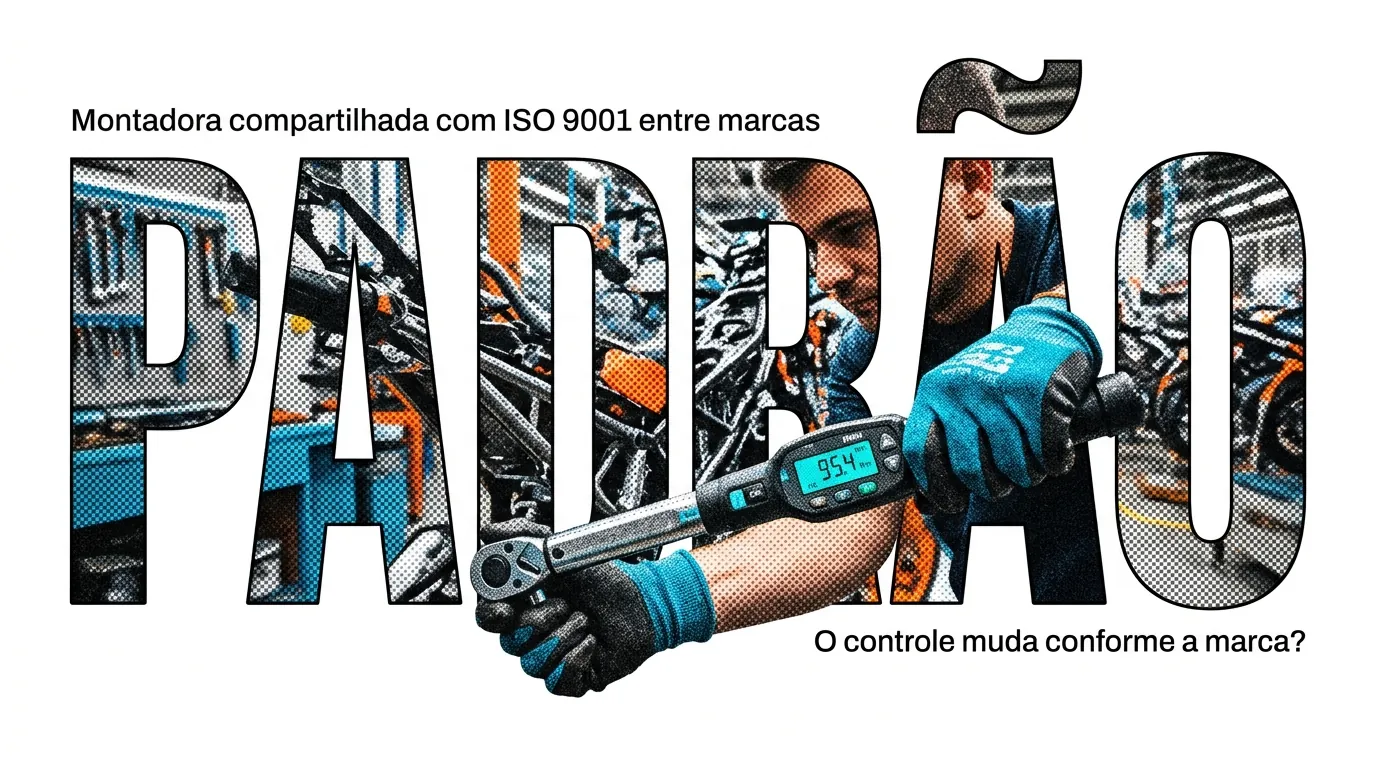
- Myth: ISO 9001 certification is just a marketing formality. Reality: in practice, it translates into torque traceability, static and dynamic inspection, and continuous audits along the line.
- Myth: you can only produce in Brazil with your own manufacturing structure. Reality: the industrial partnership model allows entry without manufacturing CAPEX, with the entry cost limited to preparing the Bill of Materials.
These myths circulate because the Manaus Free Trade Zone’s regulatory complexity is rarely explained with technical detail. Understanding the difference between what SUFRAMA requires and what actually changes in the operation prevents decisions based on assumptions.
This kind of misinformation also affects the project’s financial planning. When a brand assumes, for example, that it will need to keep an active Radar registration, it budgets for a structure that, in practice, isn’t necessary under the industrialization model. Separating myth from real process avoids this kind of oversized cost.
Why does the motorcycle plant in Manaus combining production and Suframa reduce delay risk?
A motorcycle plant in Manaus combining production and Suframa reduces delay risk because it brings the customs broker, the factory, and the tax agency under the same coordination. Instead of three independent timelines, importing, industrialization, and regulatory approval answer to the same flow, which lowers the number of failure points between steps.
Imagine a brand that finalizes an electric model’s specification in January and plans to start production in April. Under a fragmented model, that timeline depends on the broker releasing the cargo, the factory confirming the production window, and the tax agency validating the classification, each at its own pace. A delay in any of the three jeopardizes the entire schedule.
Within a motorcycle plant in Manaus combining production and Suframa, these three fronts answer to a single coordination. The PPB is already approved for the operation, inputs are imported on behalf of the industrial partner, and industrialization follows the same manufacturing process defined in the project’s engineering.
If a specific input is delayed in customs clearance, the response doesn’t depend on renegotiating deadlines with three different companies. Coordination between purchasing, importing, and production happens within the same operation, which reduces the reaction time to a one-off setback.
This is why a motorcycle plant in Manaus combining production and Suframa tends to sustain more predictable timelines than a structure with suppliers spread across different tax territories.
It’s worth noting that no model fully eliminates delay risk. What changes is the number of possible failure points and the speed of response when one of them happens. That’s the real gain of a motorcycle plant in Manaus combining production and Suframa under the same regulatory structure.
How does DBS structure OEM/CKD assembly within SUFRAMA?
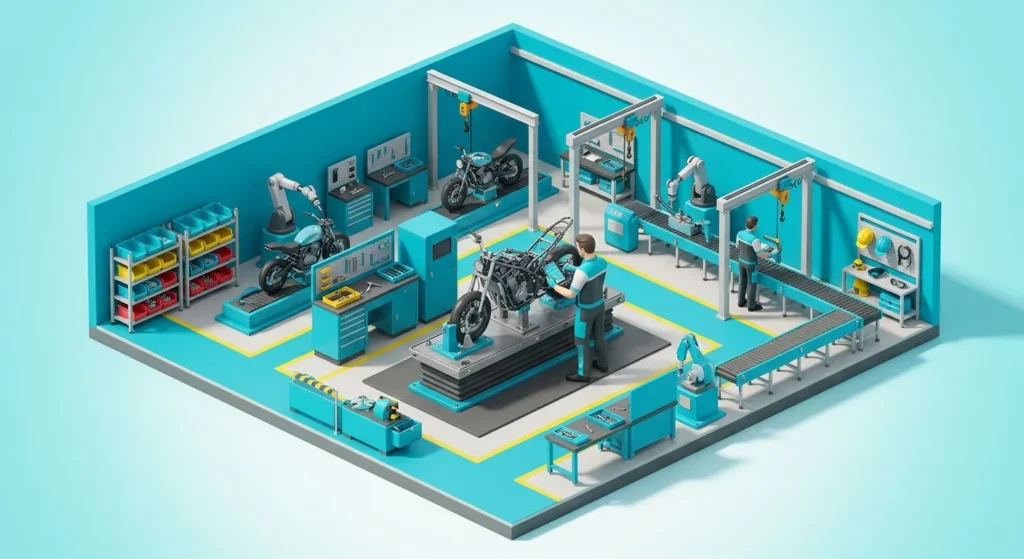
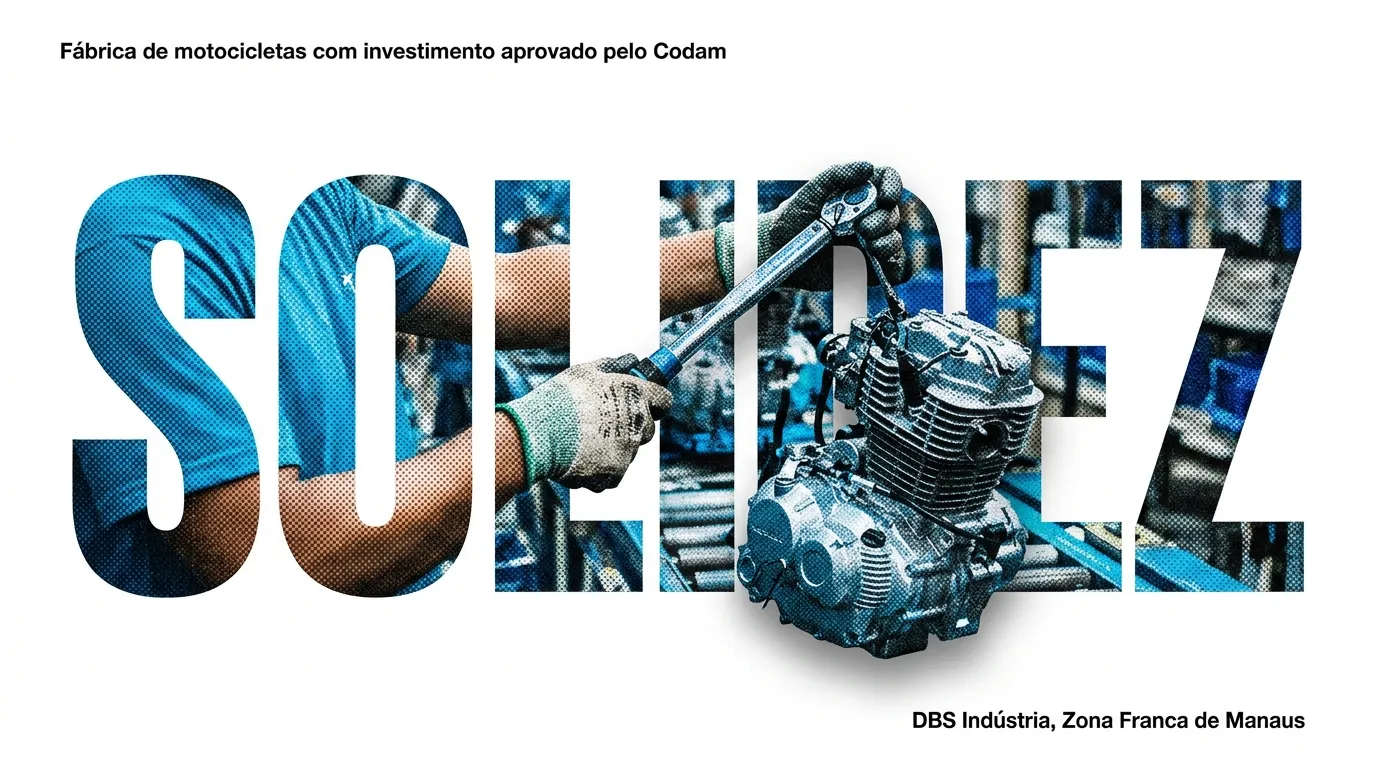
DBS operates as an industrial partner specialized in OEM/CKD in the Manaus Free Trade Zone, with a PPB approved by SUFRAMA and more than 20 years of experience in the two-wheeler mobility sector. The operation integrates engineering, supply, COMEX, manufacturing, quality, and logistics under the same structure, with installed capacity of up to 80,000 units per year.
ISO 9001 certification covers torque traceability, static and dynamic inspection, a dynamometer, and a battery lab, with auditable control at every step of the line. The client receives the complete batch at its Distribution Center and takes over commercialization in the domestic market, with the product leaving with the brand, model, and version it defined.
The minimum quantity to start a partnership is 1 FCL 40-foot high-cube container per order, with no need to set up its own manufacturing structure in Brazil. The entry cost is limited to preparing the Bill of Materials, with the price available on request, and vehicles requiring registration have an additional homologation fee. DBS also has its own WMI, authorized to stamp chassis and register domestic vehicles in the BIN.
Want to understand if your project fits this production model within SUFRAMA? Talk to the DBS team on WhatsApp and assess timelines, tax classification, and available capacity for your batch. More than 20 years of experience navigating the Manaus Free Trade Zone’s regulations supports more predictable timelines for those deciding to produce in Brazil.