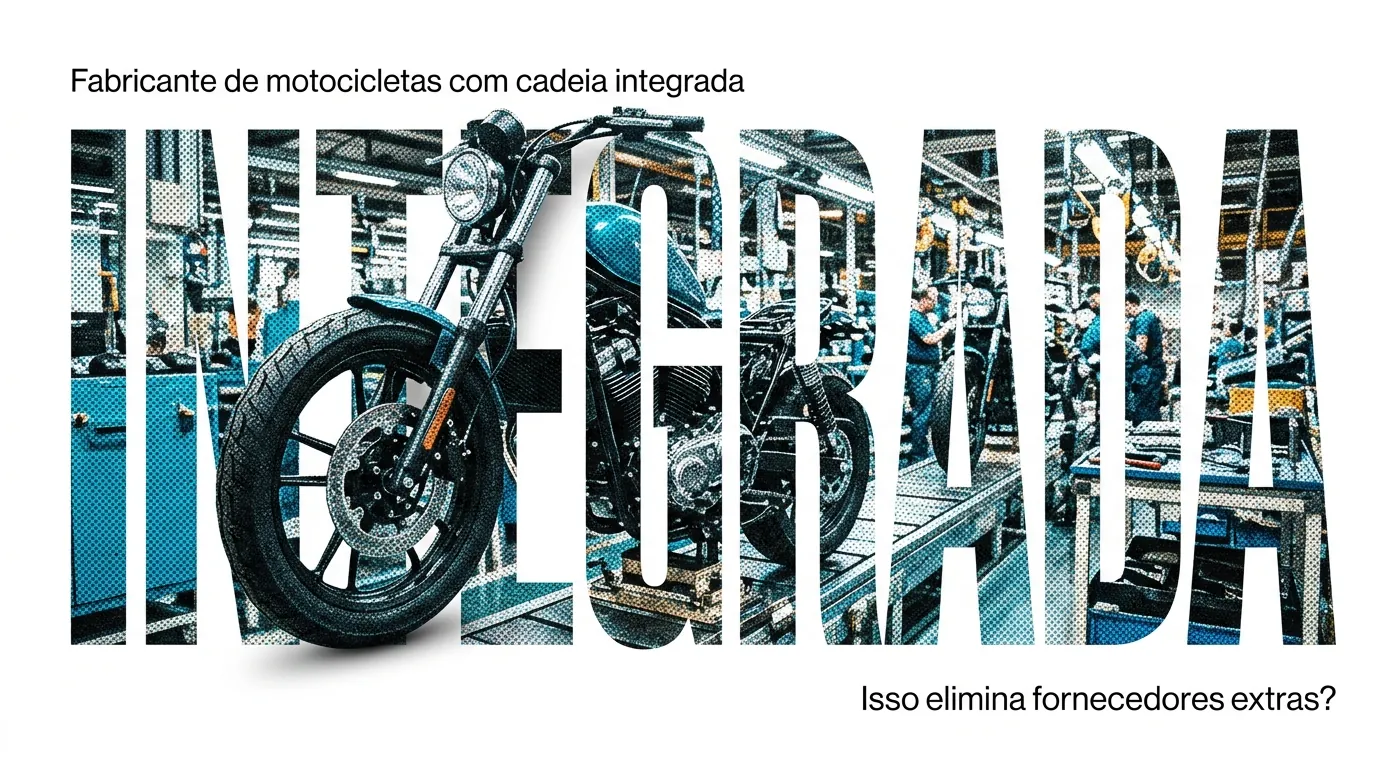
- A motorcycle manufacturer with an integrated supply chain brings together engineering, supply, importing, manufacturing, quality, and logistics in a single operation.
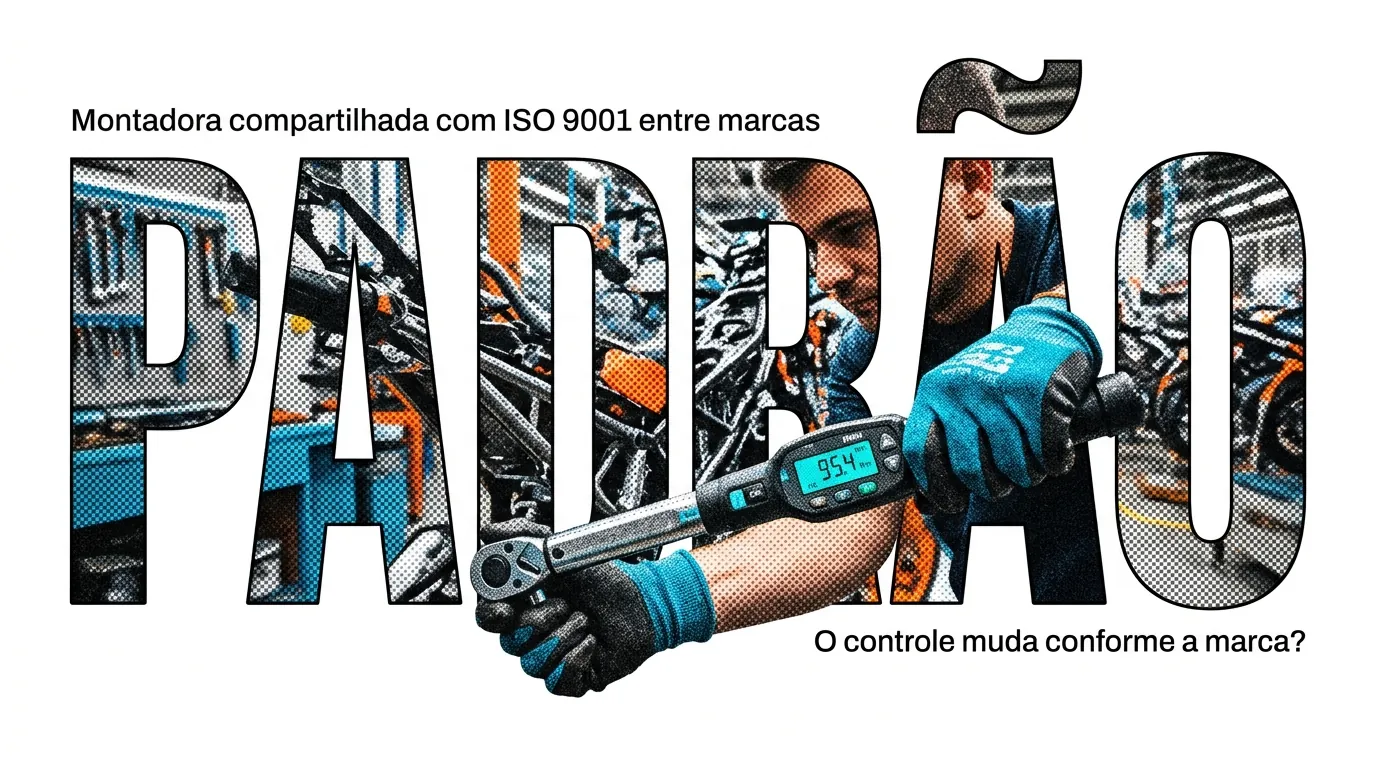
- Auditable quality control with torque traceability, static and dynamic inspection, and a dynamometer, not just paper certification.
- Integration eliminates managing separate suppliers and reduces the risk of production delays.
Motorcycle manufacturer with an integrated supply chain is the model that solves a recurring problem for anyone evaluating producing in Brazil: depending on several suppliers for each step of the process.
In this article, you’ll understand what this model represents and how the integration between engineering, supply, manufacturing, quality, and logistics works in practice.
This choice affects timeline, predictability, and your brand’s control throughout the entire industrial operation. Understanding how this model works helps you evaluate proposals from industrial partners more clearly.
Topics We Cover:
What is a motorcycle manufacturer with an integrated supply chain?
A motorcycle manufacturer with an integrated supply chain brings together engineering, supply, importing, manufacturing, quality, and logistics into a single coordinated operation. Instead of hiring separate suppliers for each stage, the brand works with a single industrial partner responsible for the entire process, from technical design to delivery of the finished product.
This motorcycle manufacturer with an integrated supply chain model is different from hiring a factory just for the assembly stage. The integration covers materials planning, importing inputs, production itself, quality control, and delivery logistics, all under the same coordination.
A practical example: if the supply of a component is delayed, a motorcycle manufacturer with an integrated supply chain adjusts the production and logistics schedule together, instead of each supplier handling the problem in isolation. It’s this kind of coordination that sets the model apart from simple assembly outsourcing.
This way of organizing production also changes how the brand tracks the project’s progress. Instead of chasing several separate companies, it has a single channel to know what stage production is at, from technical design to final logistics. This simplifies status meetings and reduces the time spent gathering information scattered across different suppliers.
Decisions to expand industrial operations into another country are already complex enough without depending on several suppliers to coordinate among themselves. A motorcycle manufacturer with an integrated supply chain reduces this complexity by taking on the role of single point of responsibility, from engineering to logistics, so the brand’s team can focus on sales and distribution.
Why is treating engineering, purchasing, and logistics as separate steps risky?
Imagine a brand that hires one supplier for engineering, another for importing inputs, and a third for final assembly, without working with a motorcycle manufacturer with an integrated supply chain. Each one solves its own problems, but no one sees the process as a whole. A delay in importing, for example, is only noticed by production once it’s already too late to react.
This is what the industry calls industrial improvisation: each front operates in isolation, with no shared visibility into the progress of the others. Any misalignment between engineering, purchasing, importing, manufacturing, and logistics jeopardizes the entire schedule.
The result is usually missed deadlines, rework, and loss of predictability right at the points of contact between one stage and another. This is exactly where a motorcycle manufacturer with an integrated supply chain makes a difference, because it reduces the number of points of contact that can fail without warning.
This kind of failure usually only shows up once the deadline is already compromised, because each supplier only sees its own stage. An integrated operation reduces this risk by maintaining visibility over the entire process, not just the part each supplier handles. This makes it easier to anticipate a problem before it affects the final schedule.
This kind of risk tends to show up exactly during moments of highest pressure, such as demand spikes or product specification changes. Without an integrated operation, every adjustment has to be renegotiated individually with each supplier, which increases the response time between one stage of the process and the next.
How does the integrated supply chain behind a motorcycle manufacturer work?
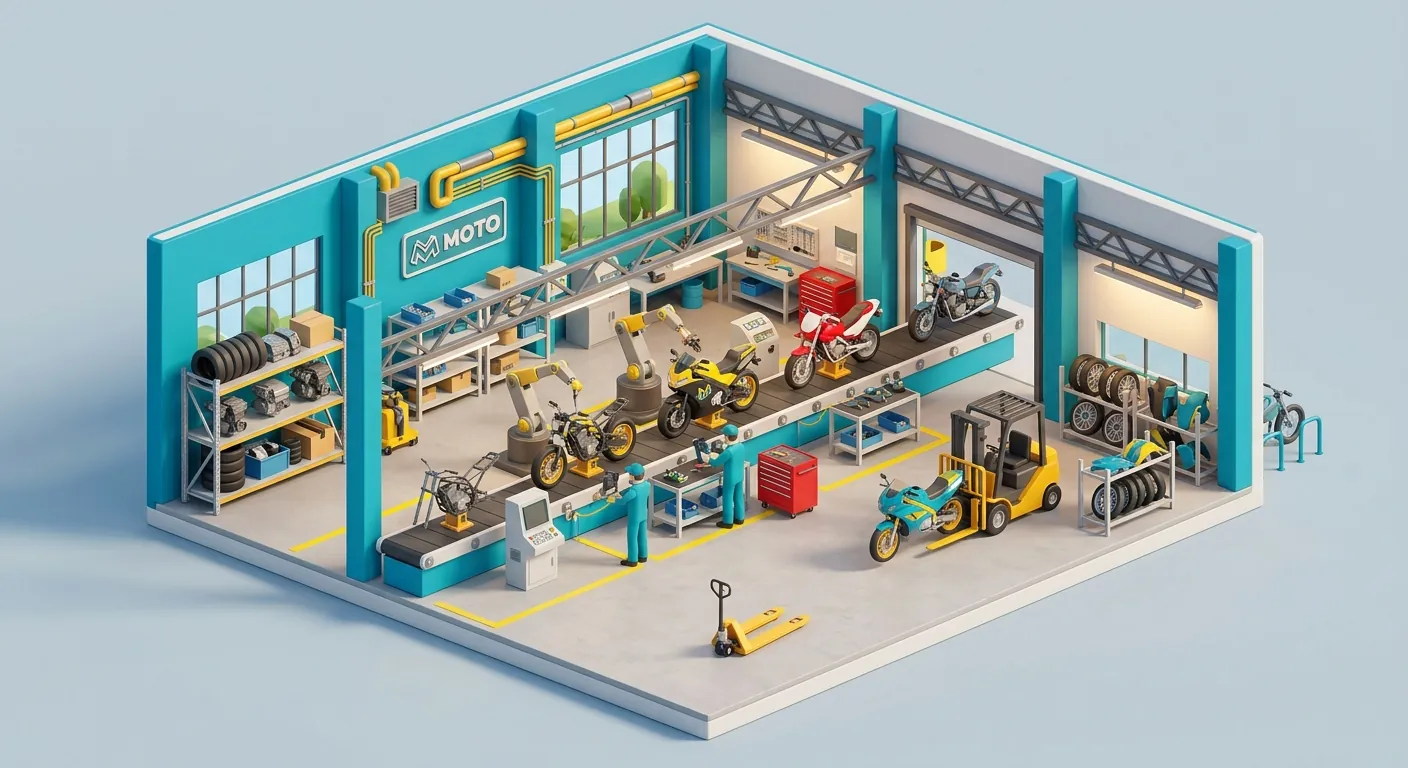
In practice, a motorcycle manufacturer with an integrated supply chain organizes production into connected stages, each one feeding the next without interruption. Each stage depends on the previous one and feeds the next, instead of working in isolation. The main stages are:
- Engineering: product structuring, bill of materials (BOM), and manufacturing routes before purchasing any input.
- Supply and COMEX: materials planning and importing inputs on behalf of the industrial partner.
- Manufacturing: industrialization in the Manaus Free Trade Zone, with a structure prepared for different production configurations.
- Quality: torque traceability, static and dynamic inspection, dynamometer tests, and battery lab testing.
- Logistics: receiving, storage, shipping, and delivery of the finished product.
This sequence is what sets a motorcycle manufacturer with an integrated supply chain apart from simple assembly outsourcing; quality control, for instance, isn’t just a certification displayed on a website. To understand the full operating model, from engineering to logistics, see how DBS’s integrated operation works.
This connection between stages is what ensures an adjustment in importing, for example, automatically reaches manufacturing and logistics planning. It’s this kind of synchronization that removes the client’s need to manage each supplier separately.
This logic of connected stages also makes auditing and accountability easier for the partner brand, because each phase of the process generates traceable records that can be reviewed. This is different from relying on informal reports sent by different suppliers, each with its own documentation standard. With a unified history, it’s easier to pinpoint which stage an issue started at.
What are the advantages of eliminating extra suppliers in motorcycle production?
Working with a motorcycle manufacturer with an integrated supply chain brings advantages that go beyond the convenience of having a single point of contact. These advantages show up in practically every stage of the operation. Among the main ones:
- Timeline predictability, because purchasing, importing, production, and logistics are coordinated by the same operation.
- Exemption from a Radar registration with the Federal Revenue Service, since inputs are imported on behalf of the industrial partner.
- Unified traceability of the process, from the input’s arrival to the finished product’s shipment.
- Less need for the brand’s own structure, with no investment required in a factory, import team, or quality lab.
- A single point of contact, the motorcycle manufacturer with an integrated supply chain responsible for the entire production, instead of several suppliers.
These advantages only materialize when the integration is real, with end-to-end visibility over every stage. That’s what sets a motorcycle manufacturer with an integrated supply chain apart from simply stacking suppliers working side by side.
In practice, this means less of the brand’s team’s time spent coordinating suppliers and more predictability about when the product will be ready for distribution. The gain isn’t just operational, it’s also commercial planning.
It’s worth remembering that these advantages don’t replace the brand’s need to understand its own product and the market it will operate in. Integration solves the production’s operational and regulatory complexity, but commercial strategy and final distribution remain the responsibility of whoever hires the industrial partner. The industrial partner’s role is to enable production with predictability, not to replace the brand’s management.
Motorcycle manufacturer with an integrated supply chain: what changes for your brand?
The most relevant point for anyone evaluating this model is that the brand doesn’t lose identity in the process. The final product leaves with the name, model, and version defined by the client, even when produced by a motorcycle manufacturer with an integrated supply chain.
Working with a motorcycle manufacturer with an integrated supply chain also resolves regulatory matters that would normally require their own structure, such as chassis stamping and registering domestic vehicles. A partner with its own WMI can take on this step on the brand’s behalf, without the brand needing to develop this capability internally.
After assembly, the client receives the complete batch at its own distribution center and takes over commercialization in the domestic market. The brand keeps control of distribution, while the motorcycle manufacturer with an integrated supply chain is responsible for production.
This model also allows production to scale as the brand’s demand grows, without needing to reinvest in its own manufacturing capacity with every new order. The industrial partner’s structure absorbs this growth. This gives the brand more flexibility to adjust volumes according to market behavior.
For brands that haven’t yet decided between building their own structure or looking for a partner, it’s worth considering that reversing a manufacturing investment decision is far more costly than adjusting a partnership contract. Testing the Brazilian market with an integrated partner reduces this risk before any final decision.
Take the next step with a motorcycle manufacturer ready for your full supply chain
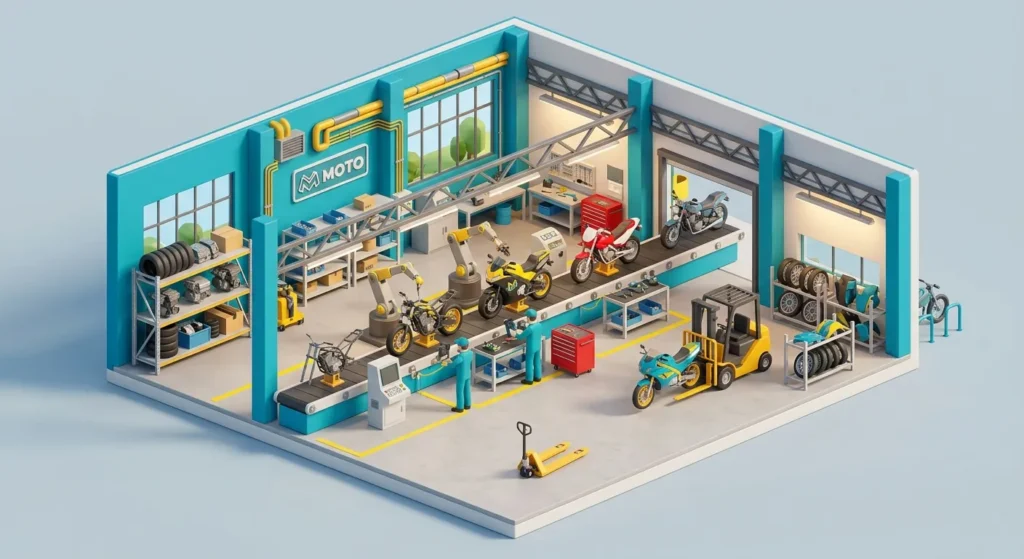
If your brand still depends on several separate suppliers for engineering, importing, production, and logistics, every delay on any of these fronts becomes a risk to the entire schedule. This is exactly the problem a motorcycle manufacturer with an integrated supply chain solves.
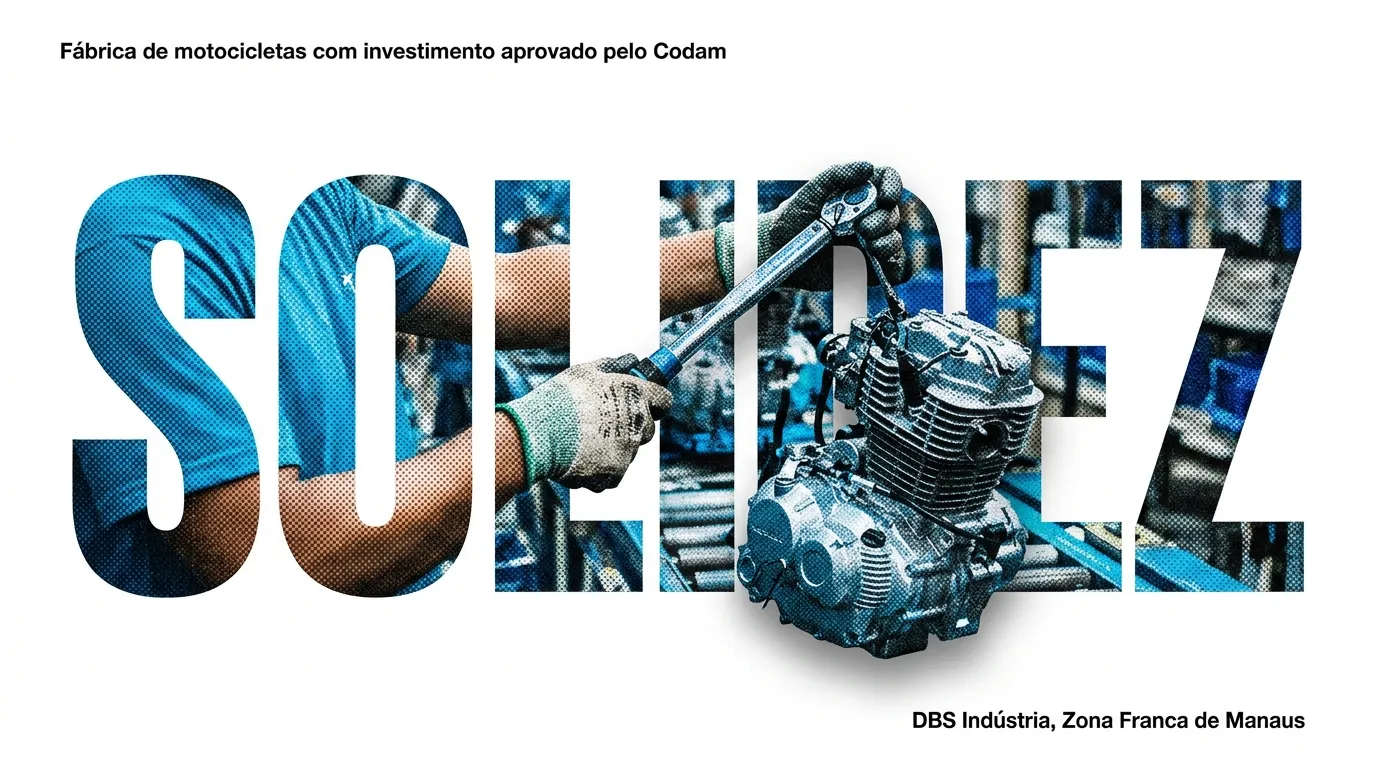
DBS is a motorcycle manufacturer with an integrated supply chain that operates as an OEM/CKD industrial partner in the Manaus Free Trade Zone, bringing together engineering, supply, COMEX, manufacturing, quality, and logistics into an ISO 9001-certified operation, with installed capacity of up to 80,000 units per year. More than 12 brands already produce in Brazil with this structure.
This structure exists precisely so the brand can enter the Brazilian market with predictability and control, without having to take on alone the regulatory, tax, and operational complexity of building its own factory. The entry cost is concentrated in preparing the bill of materials, not in manufacturing investment.
Without an integrated supply chain, every stage of entering the Brazilian market ends up being planned separately, which increases the risk of delays and costs not foreseen in the initial planning. An industrial partner with a proven track record in the sector reduces this exposure from the very first order. This track record also makes future negotiations easier, such as volume adjustments or adding new models.
Want to understand how your brand can produce in Brazil without taking on this complexity alone? Talk now with DBS’s team on WhatsApp and evaluate your operation. DBS brings together more than 20 years of industrial experience, with the entire chain under a single coordination, from engineering to final delivery.