
- A motorcycle factory in Manaus and the industrial ecosystem around it gain strength when they’re already structured for two-wheelers.
- DBS operates with a PPB approved by SUFRAMA and exemption from keeping a Radar registration with the Federal Revenue Service, lowering regulatory barriers to entry.
- Suppliers, logistics, skilled labor, and tax benefits weigh as much as the direct cost of production.
A motorcycle factory in Manaus and the industrial ecosystem around it form a combination that gains weight as soon as a brand realizes that deciding where to produce involves much more than finding an available warehouse.
This article shows why the motorcycle factory in Manaus and the industrial ecosystem around it, made up of suppliers, integrated logistics, and specific tax rules, directly influence the timeline and real cost of an operation.
Understanding this machinery before signing a contract avoids surprises that only show up after production has already started.
Topics We Cover:
Motorcycle factory in Manaus and the industrial ecosystem: Why does this weigh on the decision?
Every brand evaluating producing motorcycles in Brazil eventually reaches the same question: build its own structure or look for a partner already in place. The answer rarely depends only on the price per square meter in Manaus. It depends on what exists around the factory.
A mature industrial ecosystem means nearby input suppliers, labor already familiar with assembly processes, and logistics routes tested for years. Without that, every stage of the project becomes an isolated problem to solve from scratch. It’s this buildup of small delays that compromises the final deadline.
The motorcycle factory in Manaus and the industrial ecosystem around it resolve much of this equation before the first container even arrives. Engineering, logistics, and import processes already work together because they’ve been doing so for years, not because they were specially organized for that one project.
This is why the motorcycle factory in Manaus and the industrial ecosystem weigh as much as any number on a cost spreadsheet. Together, they determine whether the project gets off the ground in a few months or drags on for more than a year of adjustments.
A practical example: an operation with more than 20 years in the two-wheeler sector builds up suppliers and processes that a newly created structure simply doesn’t have time to gather.
How does the motorcycle factory in Manaus and the industrial ecosystem work for motorcycles?
The motorcycle factory in Manaus and the industrial ecosystem around it function as a network of specialized companies that already serve the two-wheeler sector, covering everything from importing components to final assembly. Factories, customs brokers, carriers, and parts suppliers operate close to one another, reducing lead times and coordination costs between production stages.
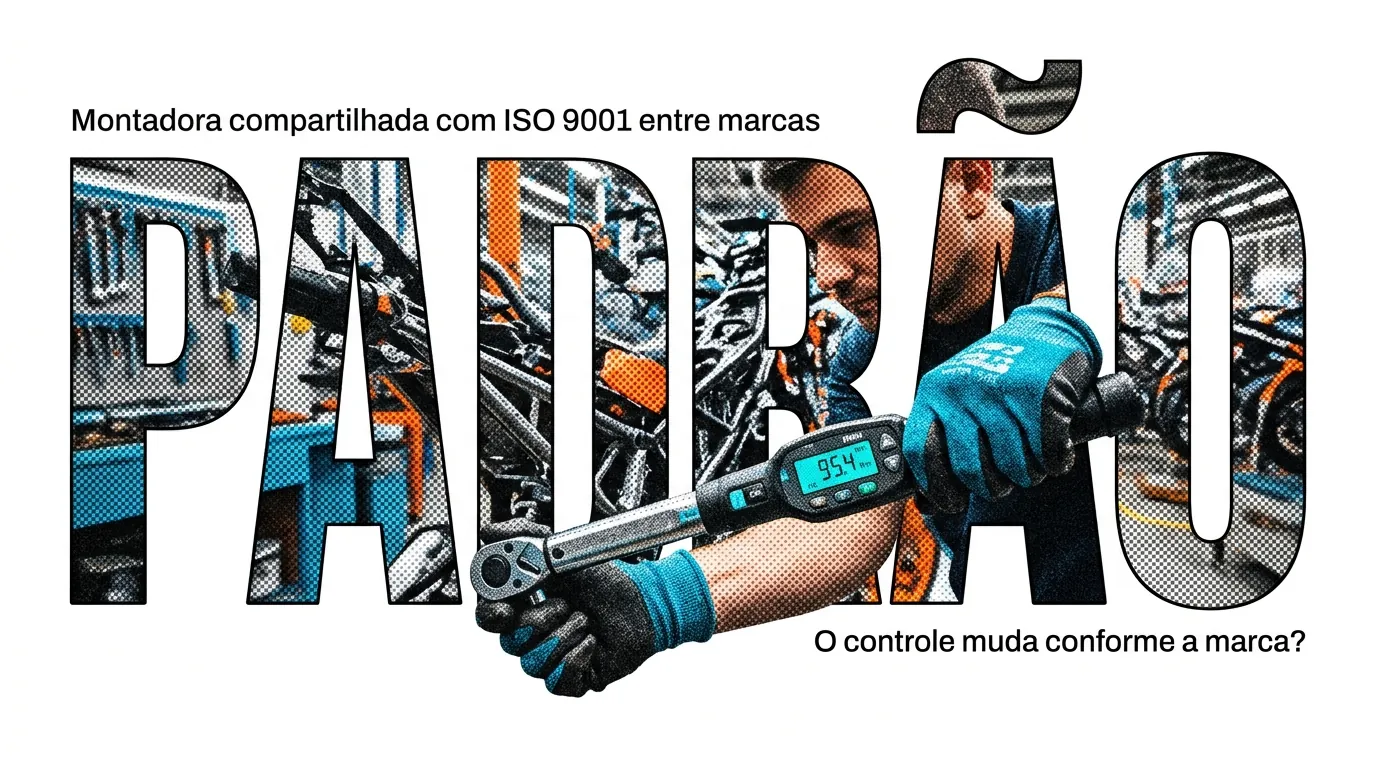
This arrangement didn’t appear overnight. Decades of operation in the Manaus Free Trade Zone shaped suppliers who understand the specific requirements of motorcycles, from static and dynamic inspection to the torque control required by ISO 9001 certification.
For anyone who has never operated in the region, it’s worth knowing that this ecosystem also includes SUFRAMA’s regulatory structure, which handles tax benefits and basic production processes differently than the rest of the country. Knowing how this network works in practice avoids decisions based only on what seems obvious from a distance.
This same ecosystem also supports details that most factories don’t disclose publicly, such as using a dynamometer and a battery lab on every batch produced. It’s this level of control that sets an auditable operation apart from one that merely claims to follow technical standards.
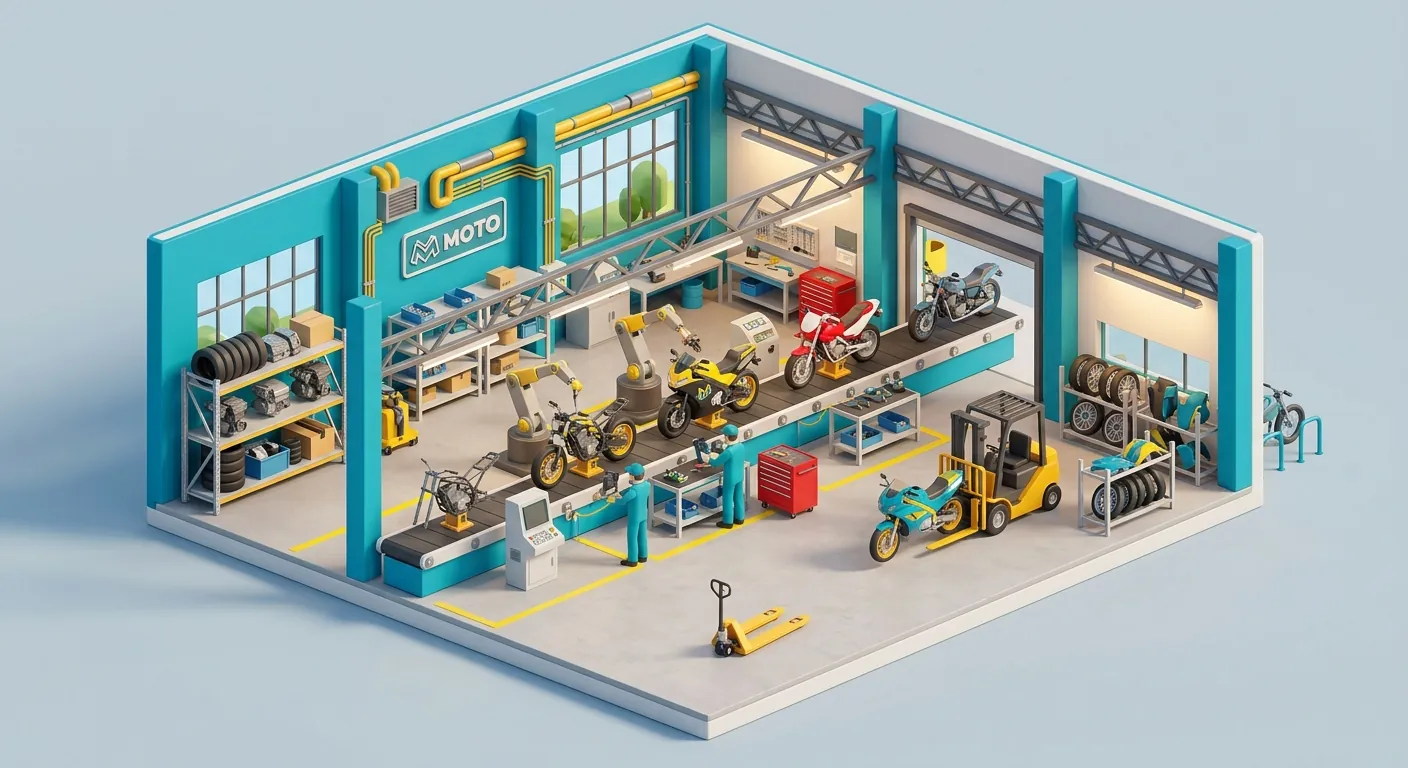
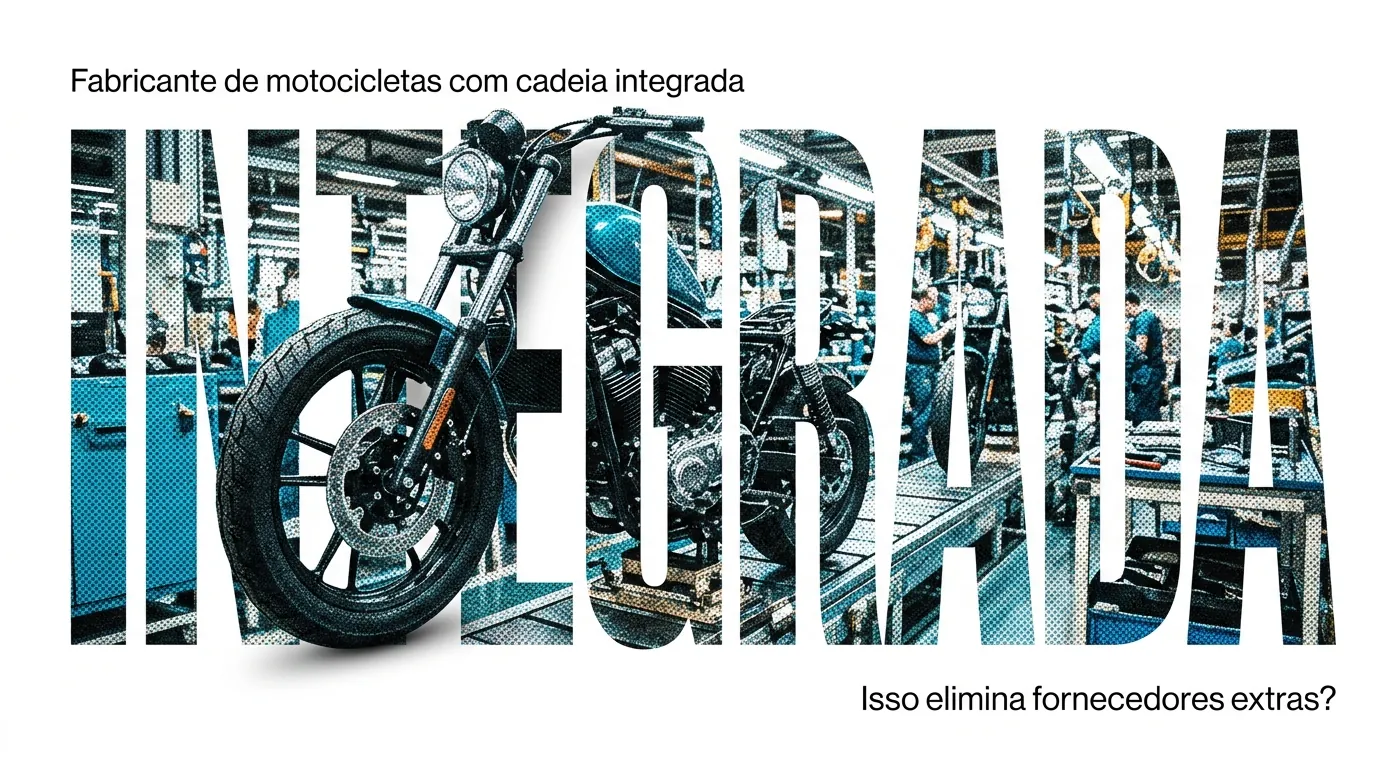
Within this arrangement, an already-established factory concentrates into a single operation stages that would normally be split among different suppliers. That means the industrial partner internally handles stages that a brand on its own would take months to put together.
Advantages of the motorcycle factory in Manaus and the industrial ecosystem within the Free Trade Zone
The motorcycle factory in Manaus and the industrial ecosystem around it bring together advantages that go beyond the best-known tax incentive within the Free Trade Zone. Here are the points that matter most in a brand’s decision:
- Fewer customs barriers, with a PPB approved by SUFRAMA covering electric motorcycles, combustion motorcycles, and other NCMs in the sector
- Exemption from keeping its own Radar registration with the Federal Revenue Service for the partner brand, since DBS imports inputs in its own name, with its own Radar registration and authorization
- Suppliers and service providers already specialized in two-wheeler components
- Logistics tested for importing inputs and distributing the finished product
- Skilled labor, shaped by the presence of other plants in the region
None of these advantages exist on their own. They hold up because the ecosystem around the factory was built over years, not hastily assembled to serve a single project.
Today, more than 12 brands, including Vammo and Avelloz, already produce in Brazil using this kind of shared structure, reinforcing that the industrial partnership model is a recurring choice, not an exception.
This model has also already been recognized by the market: in 2021, the operation made Estadão’s list of the 100 most influential companies in mobility in Brazil, and in 2024 FENABRAVE named it the country’s largest electric motorcycle manufacturer, with 58% of electric motorcycles produced domestically. That same trajectory took the company from 16th to 11th place in the Manaus Industrial Hub ranking.
PPB, SUFRAMA, and Radar exemption: What really changes for the motorcycle factory in Manaus and the industrial ecosystem?
The most relevant point for anyone evaluating producing in Manaus is the PPB approved by SUFRAMA, granted and maintained for the factory’s specific industrial projects and its lines authorized with SUFRAMA, covering motorcycles, electromechanical toys, and sporting goods within the sector’s NCMs. It’s this classification that underpins the Free Trade Zone’s tax benefit for the final product.
From there, the details unfold. A brand that operates through industrialization, rather than on a fee-for-service basis, doesn’t need to keep its own active Radar registration with the Federal Revenue Service, because DBS takes on that responsibility, importing the inputs in its own name, with its own Radar registration and authorization.
Another point that often catches brands off guard is how accessible this structure is for businesses of different sizes. DBS’s operation was designed so that small and medium-sized importers can also access a complete industrial structure, without needing the volume that would normally justify building their own plant.
This same industrialization regime also defines how the product reaches the market: the brand receives the complete batch at its own distribution center and takes over commercialization in the domestic market, keeping control of the commercial operation even without its own manufacturing structure.
This set of rules changes the legal and tax planning of any project evaluating the motorcycle factory in Manaus and the industrial ecosystem before producing in Brazil. The Manaus Industrial Hub’s recent growth shows that this regulatory arrangement keeps attracting investment to the two-wheeler sector.
Why do companies choose the motorcycle factory in Manaus and the industrial ecosystem to grow?
A brand planning to launch an electric line in Brazil once quoted building its own plant in another state. The estimated timeline was over two years just to get the factory operational, not counting the regulatory learning curve required.
By choosing the motorcycle factory in Manaus and the industrial ecosystem around it in the region, this kind of project shortens the time between the decision and the first unit produced, because engineering, importing, and logistics are already in place.
More complex projects, such as high-displacement motorcycles, also benefit from this arrangement. The experience built up with more sophisticated products, such as the project carried out with Moto Morini, shows that the Manaus ecosystem can sustain more demanding technical operations.
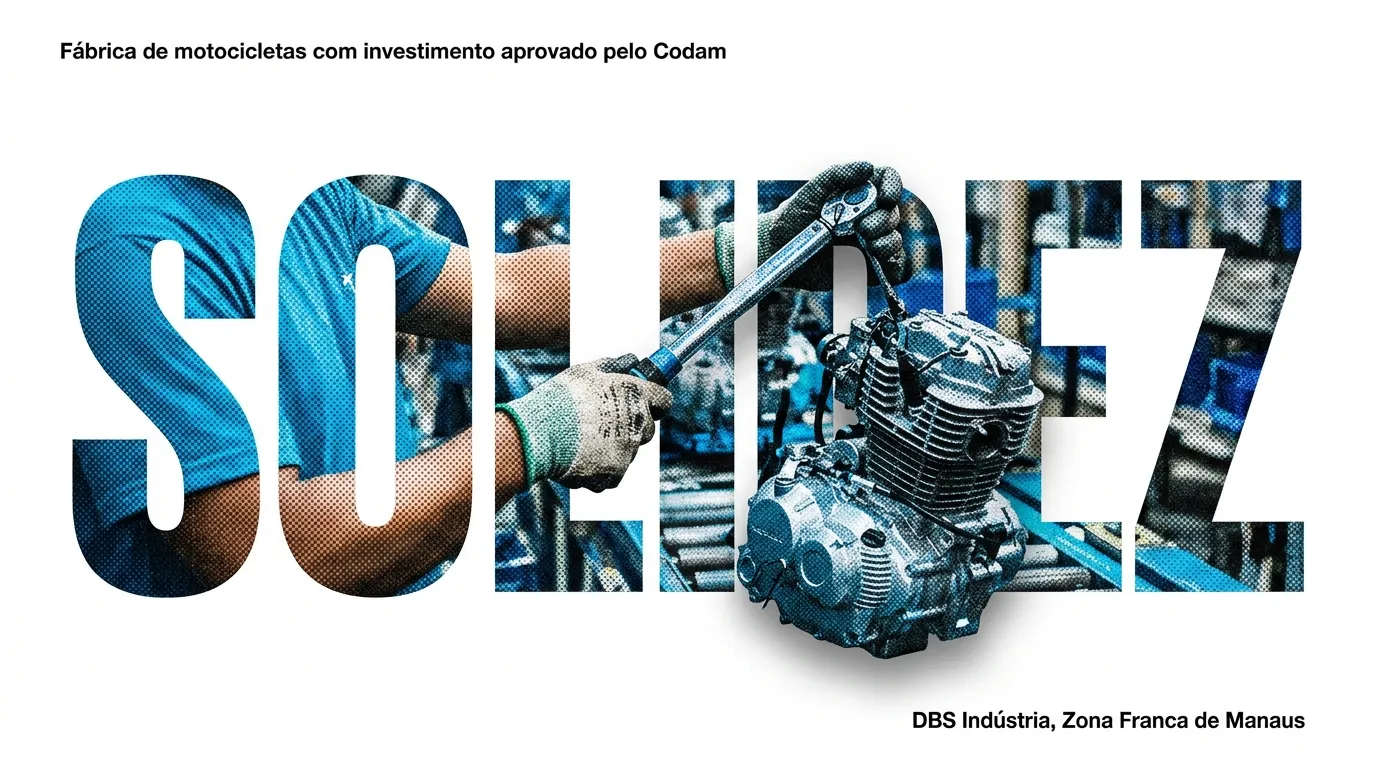
This growth also shows up in numbers: new investments between R$500,000 and R$800,000 have already been approved by Codam, and DBS’s second plant in Manaus is already operating, reinforcing this recent expansion of the industrial structure. The fact that the same operation produces its own brands while also assembling for third-party brands shows rare experience on both sides of the business.
This outcome is possible because the operation already masters torque traceability, static and dynamic inspection, and auditable quality control, as required by ISO 9001. The operation’s recent expansion in Manaus confirms that this model keeps growing.
How to weigh the motorcycle factory in Manaus and the industrial ecosystem before choosing where to produce?

Deciding where to produce a motorcycle shouldn’t depend only on the cost per square meter or the promise of speed. The motorcycle factory in Manaus and the industrial ecosystem around it determine whether the project actually gets off the ground within the agreed timeline.
DBS integrates engineering, supply, COMEX, manufacturing, quality, and logistics into a single operation within the Manaus Free Trade Zone, with ISO 9001 certification and installed capacity of up to 80,000 units per year.
Entering this model doesn’t require building your own manufacturing structure: the entry cost lies in preparing the Bill of Materials, quite different from the investment needed to build a factory from scratch.
Before closing a contract, it’s worth checking the production warranty policy to understand what’s guaranteed in each batch delivered. This kind of transparency is part of the same ecosystem that sustains timeline and quality from the moment the input arrives to the moment the finished product ships.
Has your brand already evaluated what the motorcycle factory in Manaus and the industrial ecosystem can mean for your production schedule? Talk to the DBS team on WhatsApp and understand how the OEM/CKD operation works in practice. The difference lies in producing within a structure that has already solved, years ago, the problems your brand hasn’t even run into yet.