



Brazil's Motorcycle Market Is Accelerating — And You Can Be Part of It
The Brazilian motorcycle market is growing fast, driven by demand for affordable and sustainable mobility. Explore the opportunities in the Manaus Free Trade Zone and how its fiscal incentives can work in your favor.
10/30/20244 min read
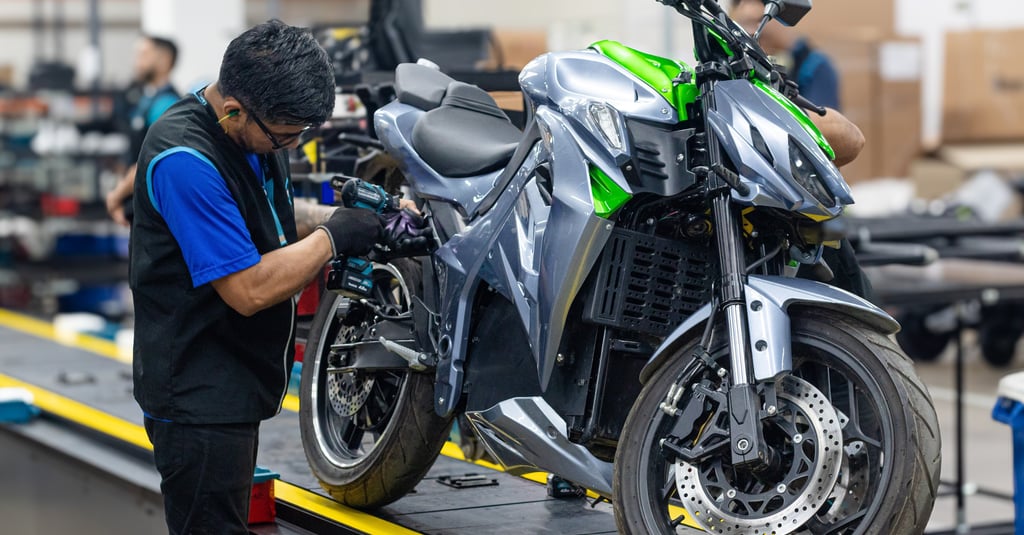
Brazil's motorcycle industry is undergoing a remarkable transformation. In 2023, sales grew 16% year-over-year, according to Fenabrave, Brazil's national vehicle distribution federation — reaching 1.57 million units registered in a single year. Behind this surge are three converging forces: rising demand for cost-efficient transportation, the urgent need for practical urban mobility, and the accelerating shift toward electric two-wheelers.
But there is one strategic factor that most international players have yet to fully explore: the Manaus Free Trade Zone (Zona Franca de Manaus). This industrial hub accounts for over 90% of all motorcycle production in Brazil and offers a fiscal framework that makes manufacturing and distribution significantly more competitive for companies operating within its boundaries.
If you are evaluating Brazil as a production or investment destination, understanding this market, and the structural advantages of Manaus, could be the deciding factor.
In this article, you will find:
✅ Why Brazil's motorcycle market continues to grow
✅ How electric and fuel-efficient models are reshaping demand
✅ The fiscal and operational advantages of the Manaus Free Trade Zone for manufacturers and investors
Why Is Brazil's Motorcycle Market Growing?
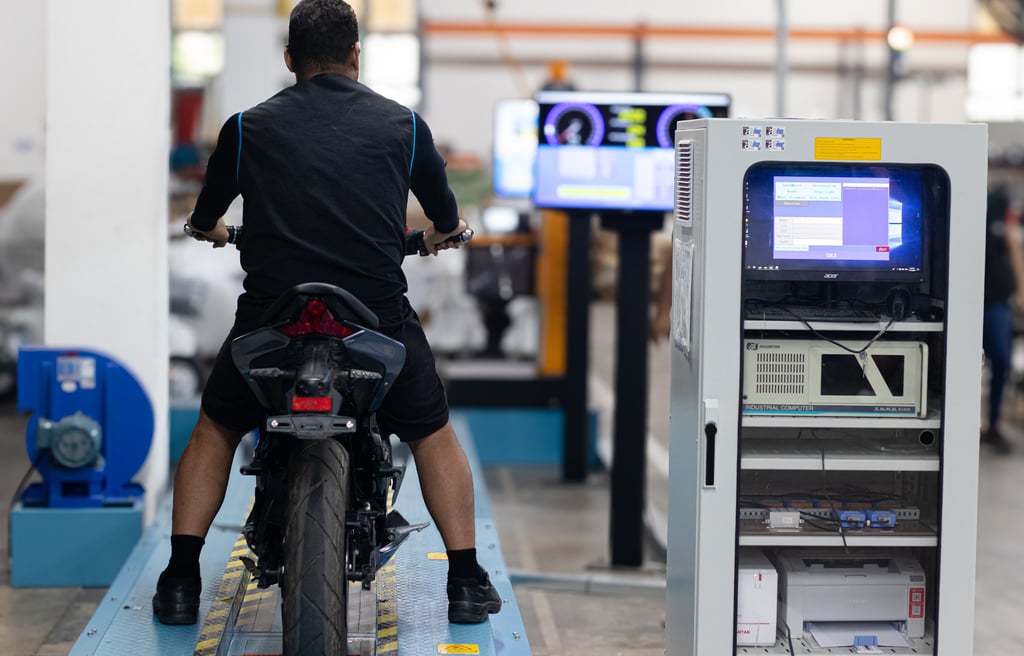
The numbers tell a clear story. Brazil registered 1.57 million motorcycles in 2023 — a 16% increase over 2022, according to Fenabrave. This is not a short-term spike. It reflects structural shifts in consumer behavior and long-term economic dynamics that continue to favor the sector.
1. Motorcycles as the Practical Choice for Urban Mobility
As vehicle ownership costs rise and urban infrastructure struggles to keep pace with population growth, motorcycles have become the default solution for millions of Brazilians. They consume less fuel, require less parking space, and carry significantly lower maintenance costs than automobiles — making them the most accessible form of individual motorized transport in the country.
For international brands, this translates into a large, price-sensitive and brand-loyal consumer base with consistent replacement cycles.
2. Congestion as a Market Driver
Brazil's major cities — São Paulo, Rio de Janeiro, Belo Horizonte — rank among the most congested urban centers in the world. In this environment, motorcycles are not a lifestyle choice: they are a practical necessity. Daily commuters, last-mile delivery workers and logistics operators depend on two-wheelers to keep moving efficiently. This structural demand is not cyclical — it is built into the fabric of how these cities function.
3. The Rise of Electric Motorcycles
Electrification is reshaping the sector. According to the Brazilian Electric Vehicle Association (ABVE), electric motorcycle sales grew 29% in 2023 — and the trend has only accelerated since. The drivers are well-established: rising fuel costs, corporate sustainability commitments, and a growing gig economy that demands lower operating costs per kilometer for delivery fleets.
Brazil's fuel prices have increased over 40% in the past three years, according to the National Petroleum Agency (ANP) — a structural pressure that consistently pushes consumers and fleet operators toward electric alternatives.
For manufacturers, the electric transition in Brazil represents both a challenge and a clear entry point: the market is still forming, demand is established, and competition at the production level has not yet consolidated.
Fuel Costs and Electrification: A Market Being Reshaped
he combination of high and volatile fuel prices with growing environmental awareness is permanently altering purchasing decisions in Brazil. Electric motorcycles are no longer a niche — they are becoming the standard for delivery platforms, corporate fleets and cost-conscious commuters.
Beyond the consumer side, Brazilian cities have begun extending fiscal benefits to electric vehicles: IPVA tax exemptions (Brazil's annual vehicle ownership tax) and reduced import duties on EV components are already in place in several states, lowering the total cost of ownership and accelerating adoption.
For a manufacturer entering this market, positioning within the electric segment from the outset is increasingly the strategically sound path.
The Manaus Free Trade Zone: Brazil's Motorcycle Manufacturing Hub
The Manaus Free Trade Zone (Zona Franca de Manaus — ZFM), located in the heart of the Amazon region, is responsible for more than 90% of all motorcycles produced in Brazil. Its dominance is not accidental — it is the result of a deliberate and constitutionally protected fiscal framework designed to attract industrial investment to the region.
Key fiscal benefits for manufacturers operating within the ZFM:
IPI exemption — Brazil's federal excise tax on manufactured goods, which significantly impacts production costs in the automotive sector
Reduced federal tax burden — across multiple tax categories applicable to industrial operations
Import duty reductions on CKD components — making the assembly model (Completely Knocked Down) highly cost-competitive compared to fully imported units
Long-term regulatory stability — the ZFM's incentives are constitutionally guaranteed until 2073, providing the kind of legal certainty that long-horizon industrial investments require
Global manufacturers such as Honda and Yamaha have long established their Brazilian production operations within the ZFM — a signal of both the model's viability and the depth of the industrial ecosystem already in place: suppliers, specialized workforce, logistics infrastructure and regulatory experience concentrated in one location.
Oportunidade paraThe Opportunity for International Manufacturers and Investors fabricantes e investidores
Brazil offers a combination that is increasingly rare in emerging markets: a large and growing consumer base, a structured industrial incentive framework, and a production hub with decades of operational maturity.
For international brands evaluating their next manufacturing move — whether through a greenfield operation, a joint venture or an OEM partnership — the Manaus Free Trade Zone provides the cost structure and regulatory predictability to make the business case work.
The market is moving. The infrastructure is in place. The question is whether your brand will be positioned to capture this demand as it scales.
Commercial Office (SP Headquarters):
Av. Nações Unidas 12901 – Torre Norte, Centro Empresarial, Brooklin Paulista – São Paulo – SP
CEP: 04578-910
CNPJ: 12.964.358/0001-13
comercial@dbsgroup.com.br | +55 (41) 9 9253-8786
Administrative Office (PR Branch):
Rua: Alferes Poli, 2080 – Centro, Curitiba – PR
CEP: 80220-051
Industrial Plant (AM Branch):
Rua: Acará, 203, Distrito Industrial I – Manaus – AM
CEP: 69075-030
CNPJ: 12.964.358/0003-85
© 2024 DBS • All Rights Reserved


Manufacturing Innovation, Accelerating Results